Your one rep max tells you the maximum weight you can lift for one clean repetition of an exercise. Maybe you know your current Back Squat PR or have a pretty good idea of how much you can put on the bar for a Clean.
But what if you don't want to test your maximum every time? You can also calculate your 1RM based on a weight you can lift for multiple reps.
We'll show you how it works, when it makes sense to test your actual 1RM and how to use that number in your training.
What Is a One Rep Max?
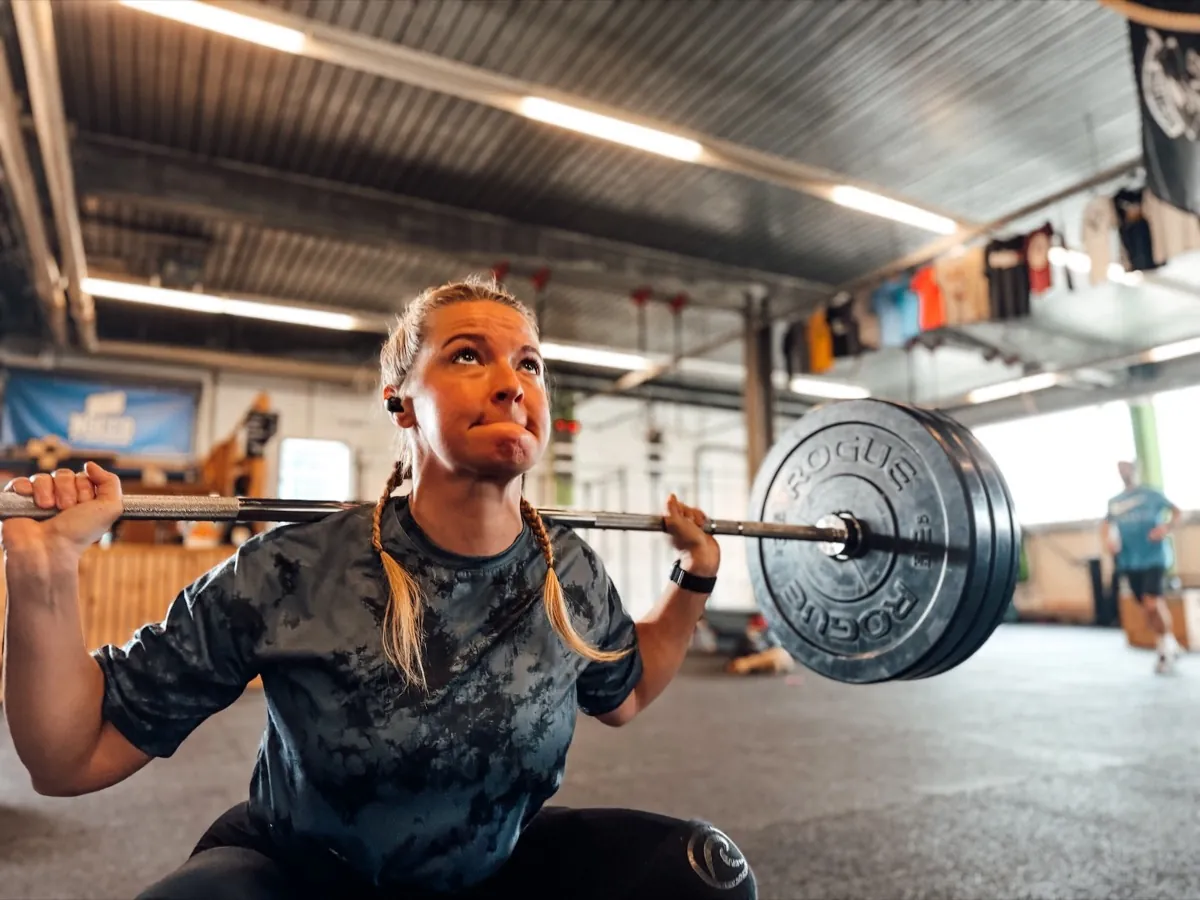
Your one rep max (1RM) is the heaviest weight you can lift for one complete repetition of a specific exercise with proper technique. If you can Back Squat 120 kg but fail at 122.5 kg, your current 1RM is 120 kg.
A 1RM always refers to a specific exercise. You don't have one universal one rep max, but individual 1RMs for movements such as the Back Squat, Deadlift, Bench Press, Clean or Snatch.
In Functional Fitness, these numbers can tell you different things about your performance. While a heavy Back Squat depends heavily on absolute strength, your Clean or Snatch also requires technique, speed, coordination and power.
Your one rep max is therefore primarily a useful reference point for your training. If your program calls for 5 × 3 Back Squats @ 80% and your 1RM is 100 kg, your training weight is 80 kg.
How Do You Calculate Your 1RM?

You don't necessarily have to perform a max-effort lift to find your approximate one rep max. Instead, you can use a weight you can lift for several clean repetitions to calculate your 1RM.
There are several formulas for doing this. One of the best known is the Epley formula:
1RM = weight × (1 + reps ÷ 30)
For example, if you can lift 80 kg for 5 reps, the calculation looks like this:
80 × (1 + 5 ÷ 30) = 93.3 kg
Your estimated one rep max is therefore approximately 93 kg.
This is also the basic principle behind a one rep max calculator: your weight and number of repetitions are used to estimate the maximum load you may be able to lift for one rep.
How accurate is a calculated 1RM?
A calculated 1RM is always an estimate. Getting 93 kg from the formula doesn't automatically mean you'll be able to lift exactly 93 kg for one rep.
How accurately your maximum can be predicted depends on factors including the number of reps performed, the exercise and your individual strengths. A heavy set of three to five reps will usually provide a better estimate than a set of 15 or 20 reps.
Some athletes are also particularly strong at heavy singles, while others can perform comparatively high numbers of repetitions at a large percentage of their 1RM. Different 1RM formulas can therefore produce slightly different results from the same set.
Use your calculated 1RM as a guideline, not as a guaranteed maximum.
Calculate or Test Your 1RM: Which Is Better?
Both methods have their place. Which one is right for you depends primarily on why you want to know your one rep max.
When is a calculated 1RM enough?
An estimated 1RM is particularly useful if you:
- want to determine your training loads,
- want to monitor your strength progress,
- prefer not to lift maximal weights regularly,
- don't have much experience with max attempts yet, or
- have no dedicated 1RM test in your current program.
For everyday training, an estimated value is often more than enough. If you used to Squat 100 kg for three reps and can now perform six clean reps with the same weight, you don't need a max attempt to know you've become stronger.
When is it worth testing your 1RM?
An actual 1RM test is useful if you want to know how much weight you can really lift for one repetition. The end of a multi-week strength block, for example, can be a good time to test your max or attempt a new Personal Record.
That doesn't mean walking into the gym cold and immediately loading your previous PR plus another ten kilos onto the bar. A maximal attempt requires a proper warm-up and a gradual progression toward heavier loads.
How Do You Test Your One Rep Max?
Start with your usual general and exercise-specific warm-up. Then gradually increase the weight. The closer you get to your potential 1RM, the fewer repetitions you should perform.
For a Back Squat, a possible progression could look like this:
- Light weight: 5–8 reps
- Moderate weight: 3–5 reps
- Heavy weight: 1–2 reps
- Maximal weights: individual 1RM attempts
How big your weight increases should be depends on the exercise, your training experience and your previous maximum. Make sure you also get enough rest between heavy attempts so that insufficient recovery doesn't become the reason you miss your next rep.
If you complete the attempt with solid technique, you can increase the weight slightly for your next attempt. If you fail the rep or your technique breaks down significantly, you've reached your limit for that day.
By the way: performed with proper preparation like this, a 1RM test is considered a reliable way to measure maximal strength — repeated tests under similar conditions deliver very consistent results.
Important: not every 1RM tells you the same thing
With a Back Squat, Deadlift or Press variation, maximal strength can be tested relatively directly. More technical exercises such as the Clean or Snatch involve additional factors.
You might have enough raw strength for a heavier Clean but fail to execute the lift properly. Your Personal Record is still the heaviest weight you've actually lifted successfully.
That's exactly why tracking different PRs is useful: they reflect different aspects of your performance.
How to Use Your 1RM to Choose Training Loads
One of the main reasons to know your one rep max is to manage training intensity. Many strength programs prescribe weights as a percentage of your 1RM.
If your Back Squat 1RM is 120 kg and your program calls for 75%, your training weight is:
120 kg × 0.75 = 90 kg
This allows the same training session to be adapted to different performance levels.
However, percentages shouldn't be treated as absolute rules. Sleep, stress, previous workouts and your current recovery can all influence how heavy a certain load feels on a given day. Two athletes with the same 1RM also won't necessarily be able to perform the same number of reps at 80%.
Your 1RM is a reference point for managing your training — not a promise of what you'll be able to do on any given day.
Track Personal Records With SmartWOD: What Your 1RM Tells You About Your Progress
A single one rep max is a snapshot. The number becomes much more useful when you compare it over time.
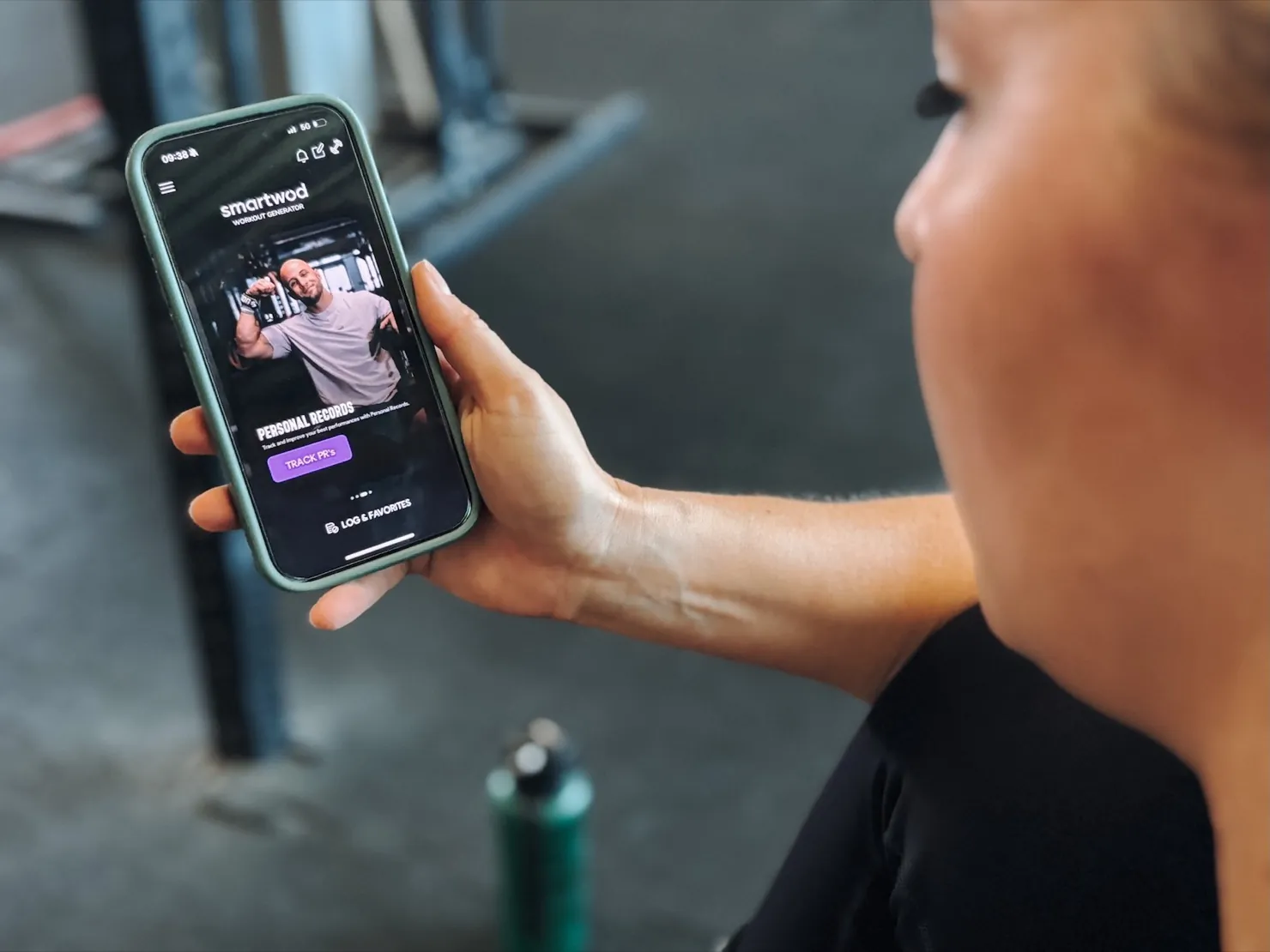
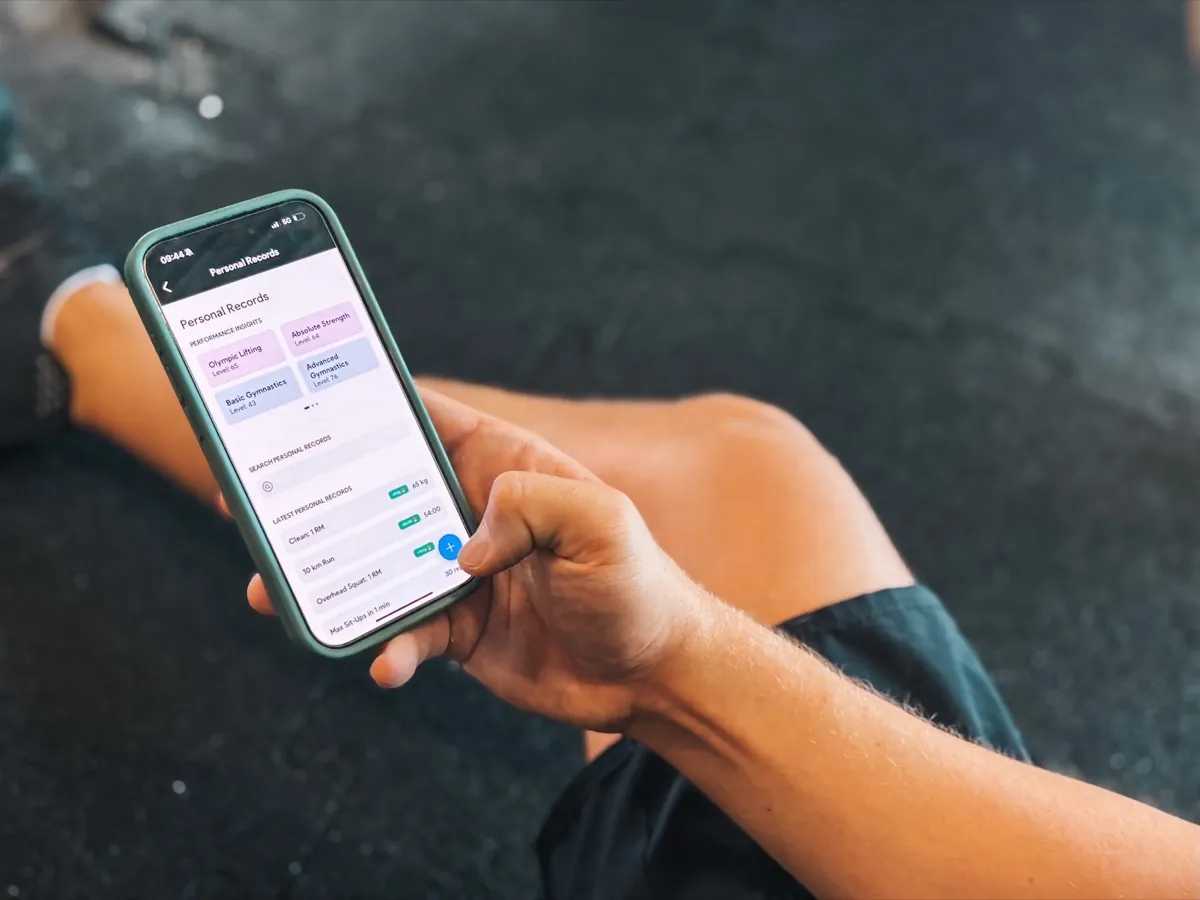
In the SmartWOD Workout Generator, you can save your Personal Records for different movements. Hit a new Back Squat, Clean or Snatch PR? Update your result and see how your performance has changed.
That doesn't just save you from trying to remember what you lifted six months ago. Your saved performances also feed into your Performance Insights.
From individual PRs to your Overall Fitness Level
Performance Insights look at your results across different areas, including:
- Olympic Lifting
- Absolute Strength
- Basic Gymnastics
- Advanced Gymnastics
- Aerobic Capacity
- Anaerobic Power
- Short Metcons
- Long Metcons
Together, these areas determine your Overall Fitness Level.
This means you don't just see that your Back Squat has increased by five kilos. You get a broader picture of your performance and can identify where your strengths lie and which areas still have room for improvement.
How Often Should You Test Your 1RM?
You don't have to constantly retest your one rep max to know whether you're making progress. How often an actual max attempt makes sense depends on your training program, experience and goals.
The end of a dedicated strength block can be a good opportunity. Between tests, your regular training sessions already provide plenty of useful information.
Can you lift the same weight for more reps? Can you move more weight for the same number of reps? Do your usual working weights suddenly feel easier? All of these can indicate progress.
And if a 1RM test goes worse than expected, that doesn't automatically mean you've become weaker. Your one rep max is always a snapshot of what you can do on that particular day.
Do You Know Your Current PRs?
Your one rep max helps you choose appropriate training loads and makes your strength progress measurable. The goal isn't to test a new maximum every week, but to track your performance over time.
Save your Personal Records in the SmartWOD Workout Generator, follow your progress with Performance Insights and find out where your biggest strengths lie — and where your next PR might be waiting.