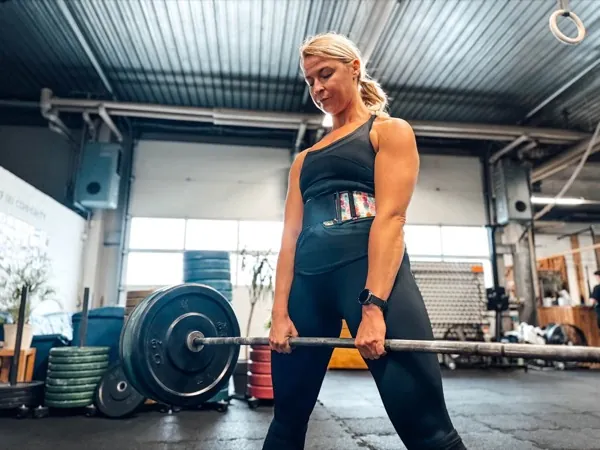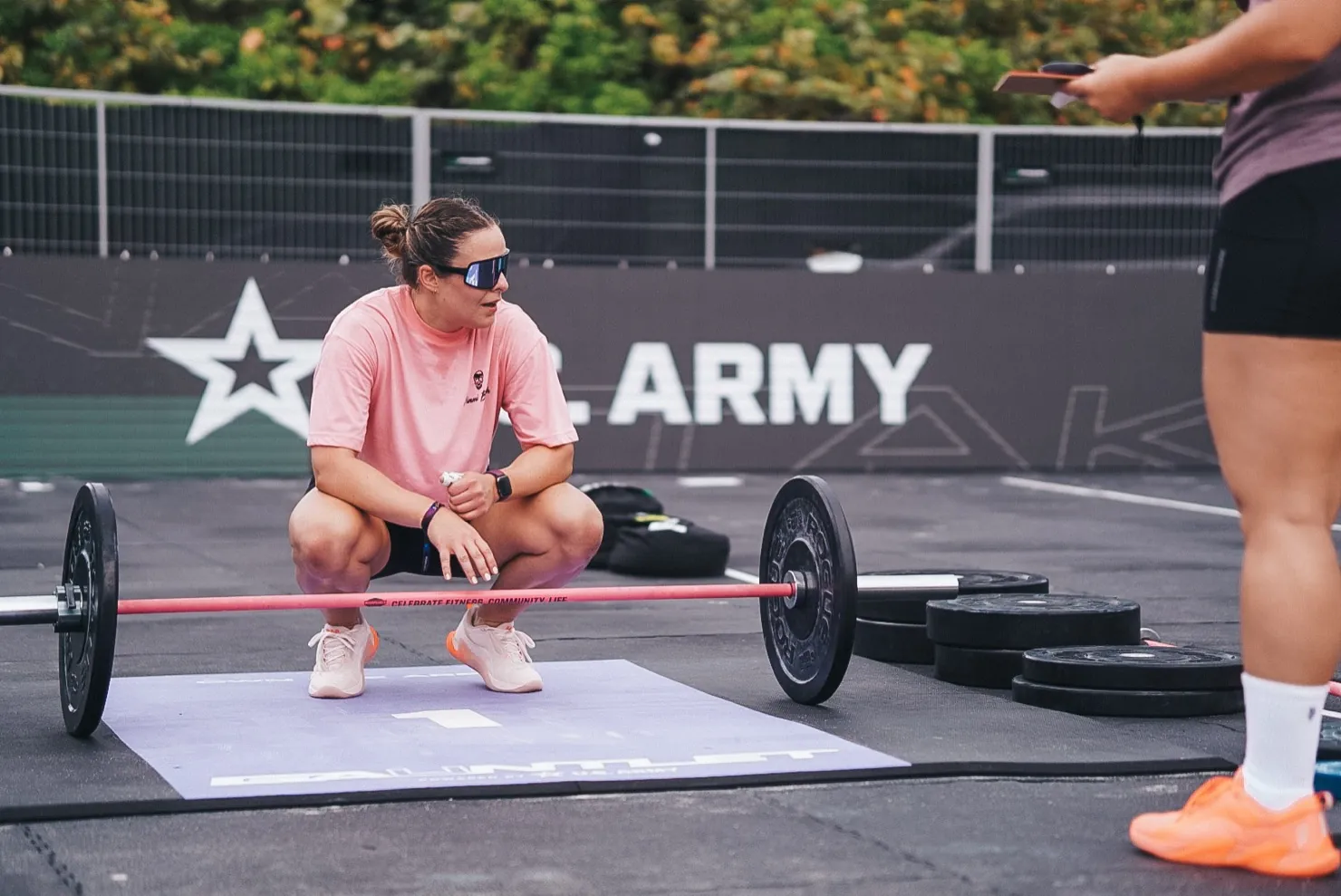
60 seconds of rest. That's enough, right? Honestly: it depends.
After a heavy set of back squats, even three minutes can fly by surprisingly fast. After a few light accessory exercises, on the other hand, you probably don't want to sit around for five minutes.
How long your rest between sets should be depends above all on what you're currently training.
Because maximal strength places different demands on your recovery than muscle building, strength endurance or a MetCon.
Why Is Rest Between Sets So Important?
A rest period isn't just the time you spend waiting until you're finally allowed to continue.
It's part of your training.
During a demanding set, your body fatigues. Depending on the load, your ability to produce a lot of force in a short time drops, for example. Your breathing, your cardiovascular system and the muscles you've been working also need time to at least partially recover.
How complete that recovery should be depends, in turn, on your training goal.
Do you want to hit five heavy deadlifts with the highest possible quality in the next set? Then you'll probably need more recovery.
Is the goal to train your ability to keep working under fatigue? Then short rests can deliberately be part of the training stimulus.
That's why the perfect rest period doesn't exist.
There's only a rest length that fits your current training goal better or worse.
How Long Should You Rest Between Sets?

If you're only here for this question, here's the short answer right away:
| Training goal | Rough guideline for rest between sets |
|---|---|
| Maximal strength / heavy sets | approx. 2–5+ minutes |
| Muscle building | often approx. 1.5–3 minutes |
| Strength endurance | approx. 30–90 seconds |
| Explosive power | approx. 2–5 minutes |
| Skill and technique work | as long as it takes to perform the next rep cleanly |
Important: these numbers are not laws.
Whether you're ready again after two or four minutes depends on the exercise, the weight, the rep count, your training level and the intensity of the previous set, among other things.
Five heavy back squats fatigue you differently than ten biceps curls. And a set close to your 1RM demands different recovery than a warm-up set.
Especially in strength training, the rule of thumb is: better to rest a little longer and perform well in the next set than to keep a rest artificially short.
The Right Rest Period for Each Training Goal
Let's look at the different goals in a bit more detail.
Rest between sets in strength training
Heavy back squats are on the plan today:
5 sets × 3 reps.
If you only rest 45 seconds after each set, this quickly turns into a conditioning session with a barbell. Which is probably not what you actually wanted to train.
When strength is the focus, you want to produce as much output as possible in every set. And for that, your body needs enough time between sets.
For heavy compound lifts like:
rest periods of several minutes are completely normal. That's especially true the heavier the weight and the closer you work to your maximal capacity.
So three minutes of rest are not a sign of poor conditioning. They can simply be the prerequisite for hitting three strong reps again in the next set.
Rest between sets for muscle building
In muscle building, one idea stubbornly persists: short rests = more muscle.
Unfortunately, it's not that simple.
Yes, short rests feel brutal. Your muscles burn, the pump is real, and after 60 seconds you don't really want to start again. But that doesn't automatically mean the short rest creates the better training stimulus.
If you rest so little that your performance collapses in the next set, you may end up doing fewer reps or having to reduce the weight considerably.
The better approach: rest long enough that you can complete your next set with sufficiently high quality.
For big exercises like squats or Romanian deadlifts, that can take longer than for smaller isolation exercises.
Rest between sets for strength endurance
With strength endurance, things look different. Here, the whole point is learning to perform repeatedly even though your muscles haven't fully recovered. Shorter rests are therefore often a deliberate part of the training.
You probably know this from functional fitness. For example:
4 rounds:
- 15 goblet squats
- 12 push-ups
- 60 seconds rest
The limited recovery changes the training stimulus. Your body has to learn to keep working with growing fatigue. A longer rest wouldn't necessarily be "wrong" — it would simply create a different workout.
Rest between sets for explosive power
Box jumps, cleans, snatches and explosive throws all have one thing in common: you want to develop a lot of force quickly.
If you head into the next set completely exhausted and your movements get slower and slower, at some point you're no longer training what you actually wanted to train.
That's why longer rest periods can make sense in explosive power training too. The goal isn't to be as out of breath as possible. The goal is to perform every rep explosively.
Rest between sets in skill training
Your first handstand walk won't necessarily get better if you attempt it 20 times in a row. The same goes for muscle-ups, double unders and demanding gymnastics drills. When you're working on a skill, you want to practice clean movement patterns.
If you're so exhausted that your technique gets worse with every attempt, you're eventually practicing one thing above all: bad reps. So rest until you can concentrate properly again and perform the movement under control.
That might be 30 seconds. Or several minutes. Quality beats the stopwatch here.
Do You Even Need Rest Between Sets in Functional Fitness?
This is where it gets interesting. Because in the middle of an AMRAP, you're hardly going to announce after twelve wall balls: "Right, I'm taking a three-minute rest now."
In functional fitness, rest shows up in different ways.
In the strength part
The same principles as in classic strength training apply here.
If five heavy sets of back squats are on the plan, for example, you should rest long enough to produce the desired output in the next set.
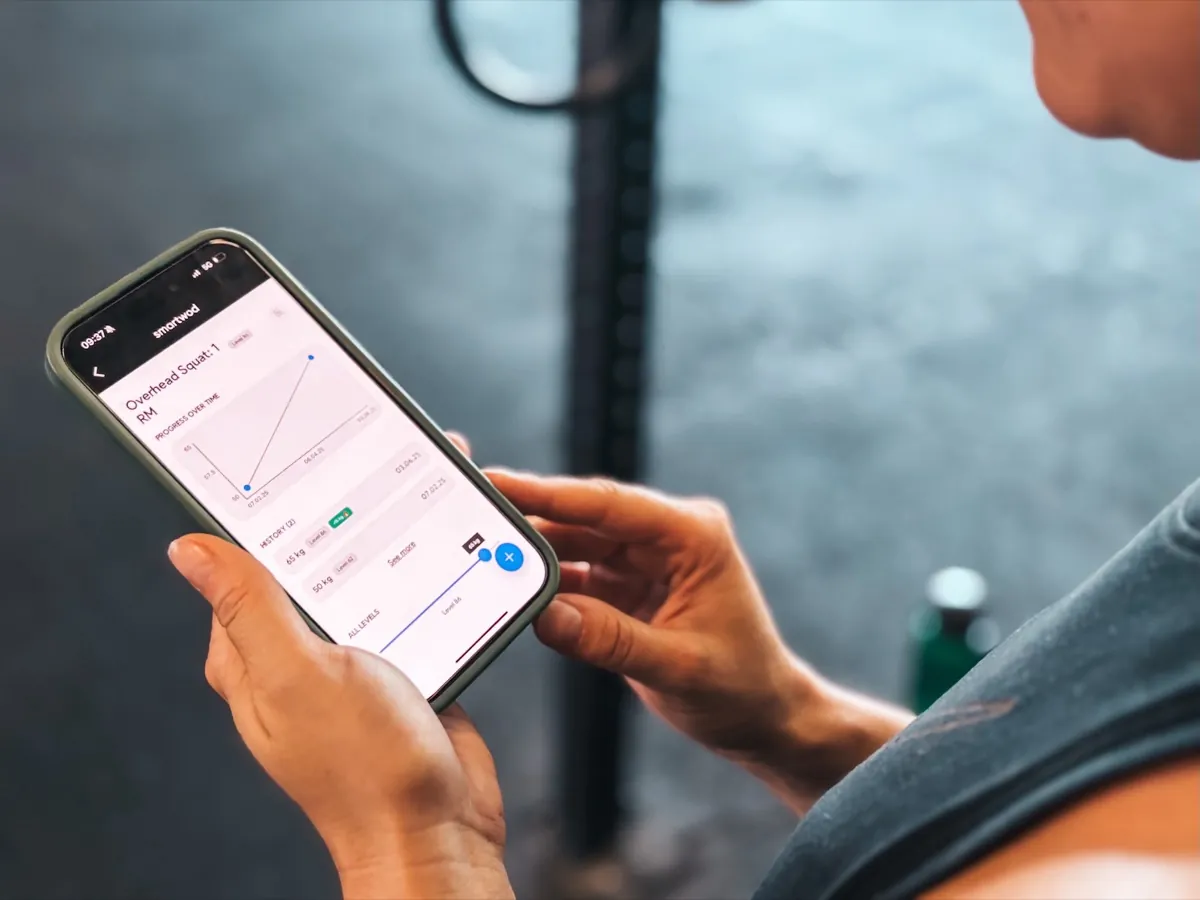
A timer like the SmartWOD Workout Timer is pretty handy for this. Because "I'll rest about three minutes" turns surprisingly quickly into either 90 seconds or seven minutes.
In the MetCon
In an AMRAP or for-time workout, rest is often not prescribed. Here, you decide yourself when to take a quick breath, drop a barbell or come off the pull-up bar.
And that's exactly why rest becomes part of your pacing strategy.
Maybe you could do 20 toes-to-bar unbroken. But if you then stand there for 30 seconds with your hands on your knees, two planned sets might have been faster.
So a short rest in a workout isn't automatically lost time. It can prevent three controlled seconds from turning into a 30-second forced break later.
In intervals and EMOMs
Here, the rest is even deliberately programmed. A simple example:
Every 2 minutes x 5 rounds:
5 heavy front squats
The faster you finish your set, the more time you have until the next interval. The ratio between work and recovery is part of the training stimulus here.
That's exactly why the same exercise with different intervals can produce a completely different workout — it's the core idea behind every EMOM.
How Do You Know Your Rest Is Too Short?

You don't have to calculate exactly how many seconds to rest every time. Your performance in the next set already tells you a lot.
Typical signs of a rest that's too short are:
- Your rep count drops sharply.
- You have to reduce the weight unplanned.
- Your technique gets noticeably worse.
- You're still so out of breath that you can barely focus on the movement.
- An explosive movement suddenly becomes slow.
- You miss reps you'd normally hit with confidence.
Of course, exactly this fatigue can sometimes be intended. In a strength endurance session, it's completely normal for the next set to get uncomfortable. With heavy squats and the goal of building strength, it's a different story.
So don't just ask yourself: "Am I ready again?" Ask: "Am I recovered enough for what I want to achieve in the next set?"
Can you also rest too long?
Sure. If you hang on your phone for ten minutes after every set, at some point you're training your Instagram feed more than your squats.
But here too, context matters. For a very heavy attempt, five minutes of rest can be absolutely sensible. For three sets of light accessory work, they'd usually be unnecessary.
Rests that are too long can also throw you out of your training rhythm or drag a session out unnecessarily.
So the solution isn't to rest as briefly as possible, but as long as necessary.
Your Rest Between Sets Is Part of Your Training
More rest isn't laziness, and less rest isn't automatically harder or better. What matters is what you want to achieve with your training.
So don't treat your rest between sets as an annoying interruption. It's part of your training — just like weight, reps and tempo.
So: start the SmartWOD Timer, take a breath, and get back to work with a plan.