
Have you ever lowered yourself into a squat for three full seconds, held the bottom position for a moment and then driven yourself back up?
If so, you know: even five reps can suddenly feel awfully long (and heavy).
That's exactly the principle behind time under tension (TUT).
Instead of only counting reps and weight, another variable comes into play: how long are your muscles actually under load during a set?
Slow negatives, paused or held reps can noticeably change the training stimulus — without you putting any extra weight on the bar.
What Does Time Under Tension Mean?
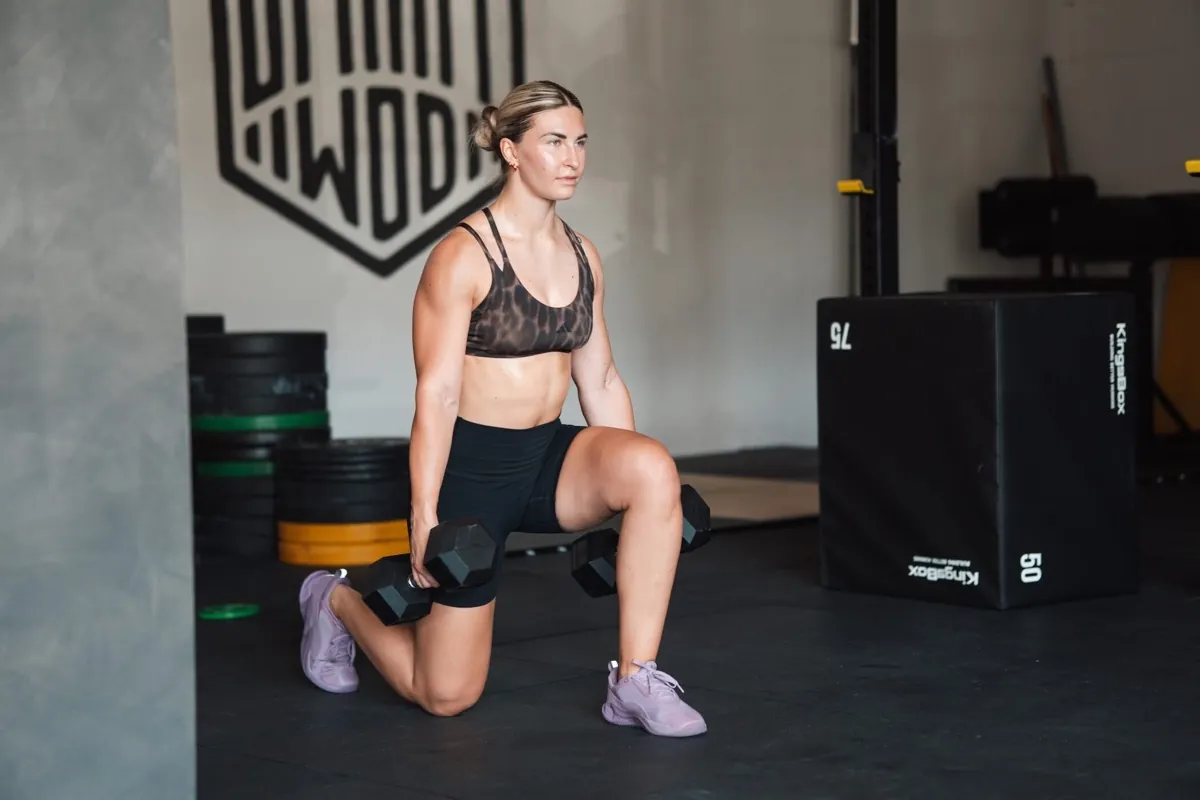
Time under tension, TUT for short, refers to the time your muscles are actively loaded during a set.
Two sets of ten reps each can look identical on paper — and still feel completely different.
Let's take squats as an example:
- With ten fast reps, the whole set might take you 20 seconds.
- If instead you lower yourself for three seconds on every rep and additionally hold the bottom position for one second, you're quickly busy for 50 seconds or more.
Same rep count. Same weight. But a considerably longer time under load. And that's exactly what you can use deliberately in training.
What Do Slow Reps Actually Do?

Slower isn't automatically better. But if you change the tempo deliberately, you can set a completely different training stimulus.
You control the movement more
Try lowering yourself into a squat over five full seconds. Suddenly you notice pretty precisely what your body is doing during the movement.
- Do your knees stay stable?
- Are you keeping tension in your core?
- Are you shifting your weight?
- Do you lose control just before the deepest position?
Speed and momentum can sometimes mask small technical weaknesses. Take both away, and they become far more obvious.
That's why tempo training is excellent when you want to perform movements with more control and improve specific positions.
Your muscles work longer
This is the most obvious effect of time under tension. If a set suddenly takes 45 seconds instead of 20, your muscles have to work correspondingly longer. Especially for muscle building, TUT is therefore often cited as an important principle.
However, you shouldn't turn that into the rule "the longer, the more muscle".
Muscle growth depends on training volume, load intensity, proximity to muscle failure and progressive overload, among other things. The pure duration of a set is only one part of the picture.
You can target weak points
- Do you struggle to get out of the bottom of your squat? Then pause squats can be interesting.
- Are you missing the strength for your first strict pull-up? Then slow negative pull-ups can help you build strength specifically in the lowering phase.
- Does your position fall apart in the Romanian deadlift? A slower descent gives you more time to consciously control the hip movement and tension.
So time under tension lets you deliberately emphasize specific parts of a movement instead of simply doing more reps.
Eccentric, Isometric and Concentric: What Does Each Phase Do?

To use tempo training effectively, it's worth taking a quick look at what actually happens during a rep. A movement can be roughly divided into three phases of muscle work.
Eccentric phase: the muscle lengthens under tension
- In the squat, this is the descent.
- In the pull-up, it's the way from the top back down into the hang.
- In the Romanian deadlift, you lower the weight toward the floor under control.
This phase is often deliberately extended in training. Instead of simply dropping into the next squat, you can take three to five seconds for the descent, for example.
Slow eccentric reps are especially practical because you can often control more load than you could move concentrically. That's exactly why negatives are so common in skill and strength work.
Isometric phase: you hold a position
Nothing moves on the outside here — your muscles are working anyway.
Typical examples are:
- Pause squats
- Dead hangs
- Hollow holds
- Planks
- Hold positions in the pull-up
You can use isometric work to build body tension or to specifically strengthen a position that normally gives you trouble.
One second of pause at the deepest point of a squat sounds harmless, for example. With a heavy barbell, it suddenly feels surprisingly long.
Concentric phase: you overcome the resistance
This is usually the part we spontaneously associate with "the rep". You stand up out of the squat, pull yourself up in the pull-up or press yourself off the floor in the push-up.
You can deliberately slow this phase down too. Often, however, it makes more sense to perform it controlled or explosively — depending on what you want to train.
So you don't have to artificially extend all three phases to use time under tension effectively.
How to Use Time Under Tension in Your Training
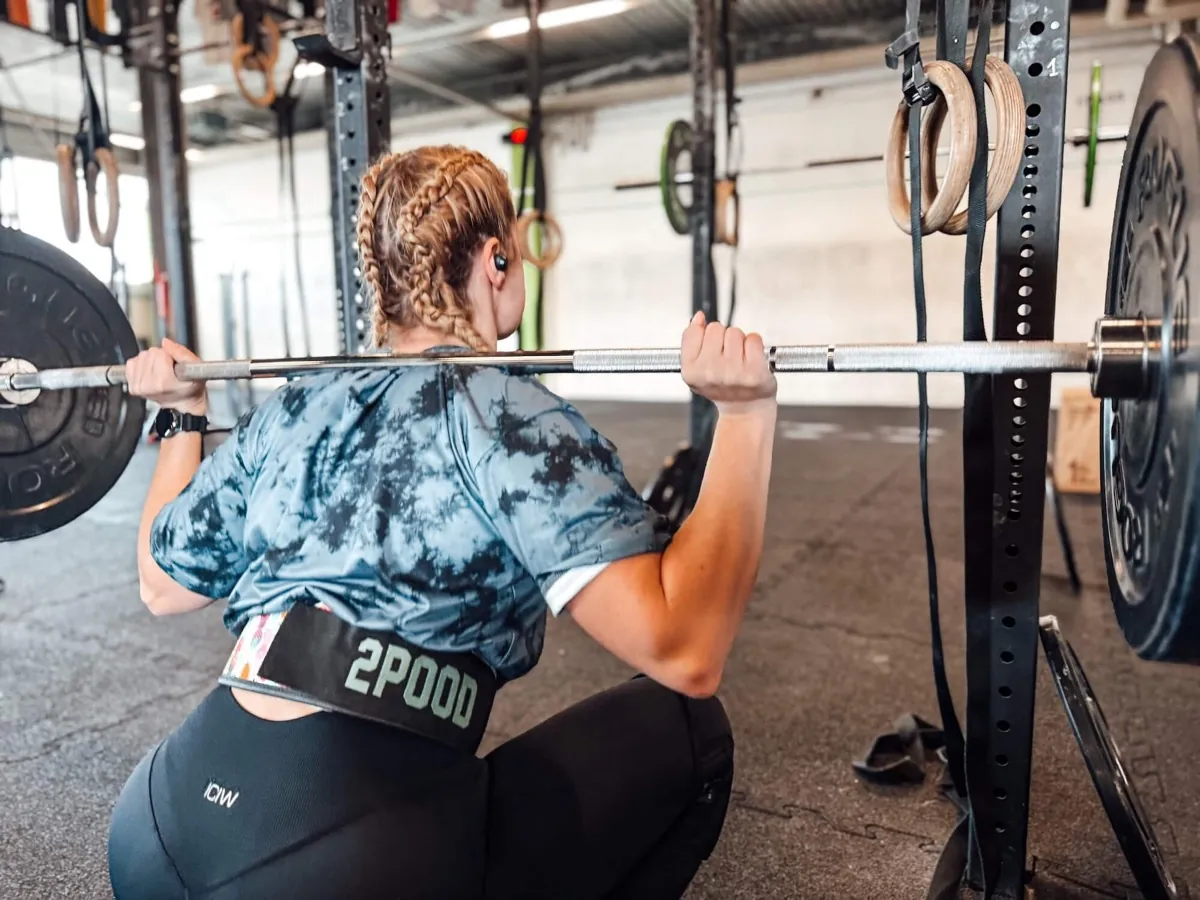
Enough theory. What does this look like in practice? Here are a few ways you can build TUT straight into your training.
Tempo squats
Squats are perfect for tempo training. Try, for example:
5 x 5 back squats at 3-1-X-0
That means: lower for 3 seconds, hold for 1 second at the bottom, then stand up as explosively as possible.
You'll probably have to use less weight than in normal back squats — and that's completely fine. The extra tempo is part of the training stimulus, after all.
Negative pull-ups
Can't do a strict pull-up yet? Then jump or step into the top position and lower yourself into the hang under control over three to five seconds.
Instead of somehow clinging to the bar for as long as possible, try to control the descent evenly.
Even if you can already do pull-ups, slow negatives can be a useful addition for your pulling strength — and as covered in our strict vs. kipping article, they're one of the smartest stepping stones toward your first strict rep.
Tempo push-ups
You can quickly turn normal push-ups into a different exercise too. Lower yourself for three seconds, for example, hold briefly just above the floor and then press back up.
If your body tension suddenly disappears, you've just found something to work on.
Romanian deadlifts
In the Romanian deadlift, the eccentric phase is particularly well suited. Lower the weight under control over three or four seconds and focus on pushing your hips back and keeping tension in the posterior chain.
The point isn't to be as slow as possible — it's to consciously control the movement.
Holds and pauses
Time under tension doesn't always have to mean a slow rep. You can also deliberately hold positions.
For example:
- Hollow hold
- Dead hang
- Handstand hold
- Pause in the squat
- Holding above the bar in the pull-up
Depending on which movement you want to improve, this lets you train exactly the position where you've been lacking strength or control so far.
If you're unsure about an exercise, you'll find plenty of videos and explanations on proper form in the exercise library of the SmartWOD Workout Generator.
Ready for a Little More Tension?
In your next strength session, you can try time under tension for yourself: take some weight off, deliberately slow down the eccentric phase or build a short pause into your weakest spot.
And when it's time for a bit more speed again, the SmartWOD Workout Generator has plenty of workouts to match your equipment.