Strict or kipping — which one is actually better?
If you do functional fitness, this debate is probably nothing new to you.
Some swear by clean strict reps, others fly through workouts with kipping pull-ups or handstand push-ups.
But do you even have to pick a side?
Not really. Strict and kipping pursue different goals — and that's exactly why both variations have a firm place in functional fitness and CrossFit.
What Do Strict and Kipping Actually Mean in Functional Fitness?
Strict and kipping describe two different ways of performing gymnastics movements like pull-ups or handstand push-ups. The biggest difference: in strict movements you deliberately avoid momentum, in kipping you use it deliberately.
What does strict mean?
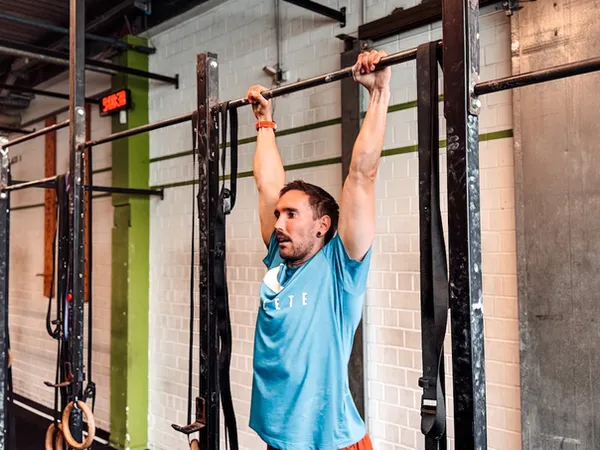
Strict means performing a movement without deliberately generated momentum. The required strength comes mainly from the muscle groups responsible for that movement.
- In a strict pull-up, for example, you pull yourself up from the hang without using your hips or legs.
- In a strict handstand push-up, it's mainly your shoulders and triceps that press you back up.
Strict movements therefore demand above all strength, body tension and control.
What does kipping mean?
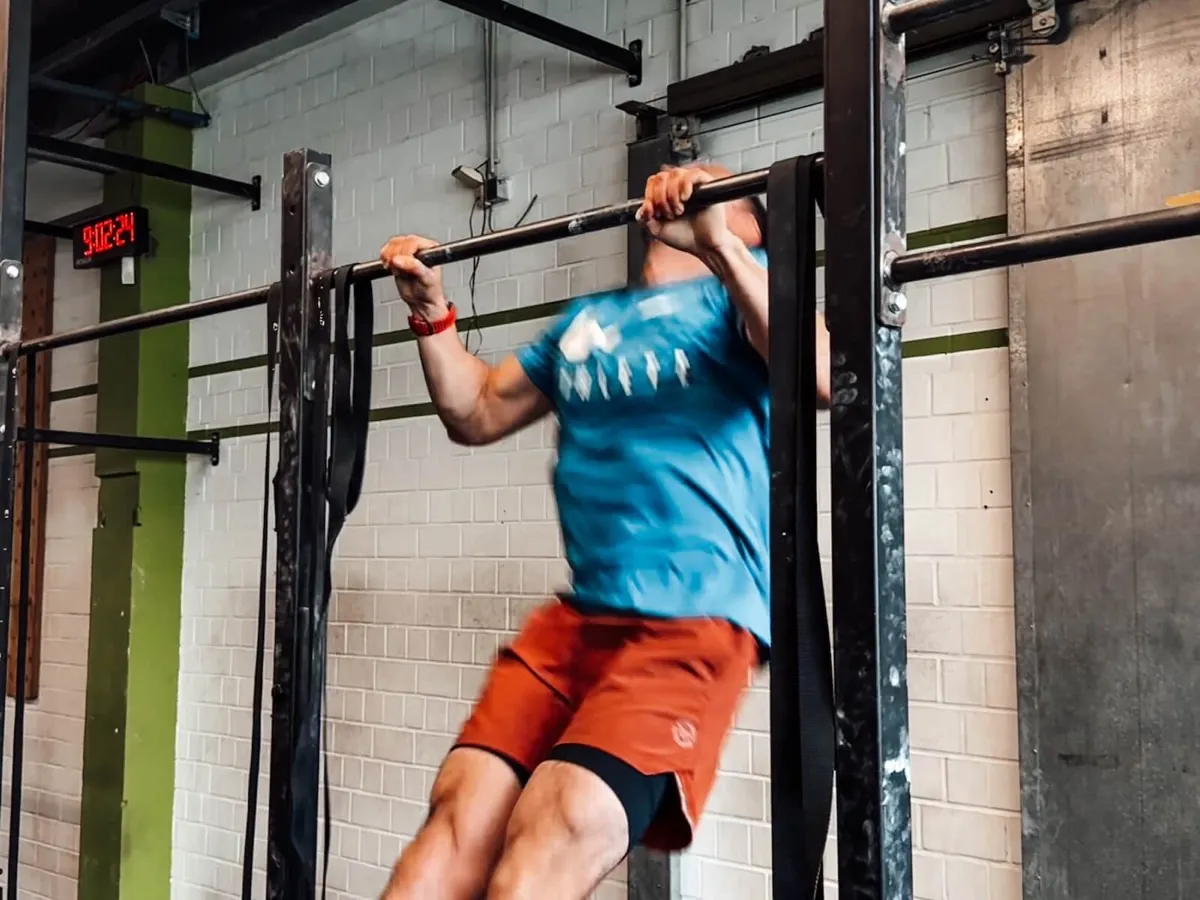
In kipping, you use your body deliberately to generate momentum and perform the movement more efficiently.
How that works depends on the movement:
- In kipping pull-ups you switch rhythmically between the hollow and arch position.
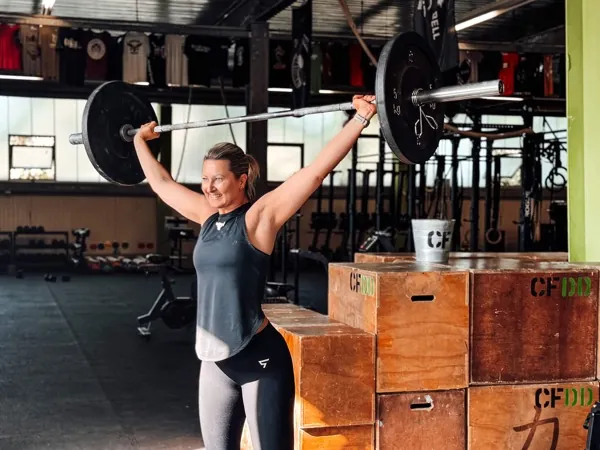
- In the kipping handstand push-up you drive your hips and legs explosively to support the pressing movement of your upper body.
Important: kipping does not mean just swinging around somehow.
A clean kip is a learned technique. You need body tension, coordination and the right timing to transfer the momentum you generate onto the movement in a controlled way.
Strict vs. Kipping: When Should You Use Which Variation?
The answer depends above all on what you want to achieve with your training.
If you're currently working on getting stronger at pull-ups, for example, strict pull-ups should have a firm place in your training. If, on the other hand, there are 50 pull-ups waiting in a MetCon and your kipping technique is solid, kipping can be the smarter (and faster) choice.
| Your goal | Best variation |
|---|---|
| Build foundational strength | Strict |
| Get your first pull-up | Strict |
| Improve control and stability | Strict |
| Fix weaknesses in specific positions | Strict |
| Learn kipping technique | Kipping |
| Improve timing and rhythm | Kipping |
| Handle high reps efficiently in a workout | Kipping |
| Prepare for functional fitness competitions | Both |
So it's not about deciding on one variation. Instead, you should learn to use both techniques deliberately.
Strict vs. Kipping: Which Exercises Are There?

When people hear the term kipping, most probably think of pull-ups first. But you'll come across the principle in various gymnastics movements in functional fitness.
These include, for example:
| Movement | Strict | Kipping |
|---|---|---|
| Pull-ups | ✓ | ✓ |
| Chest-to-bar pull-ups | ✓ | ✓ |
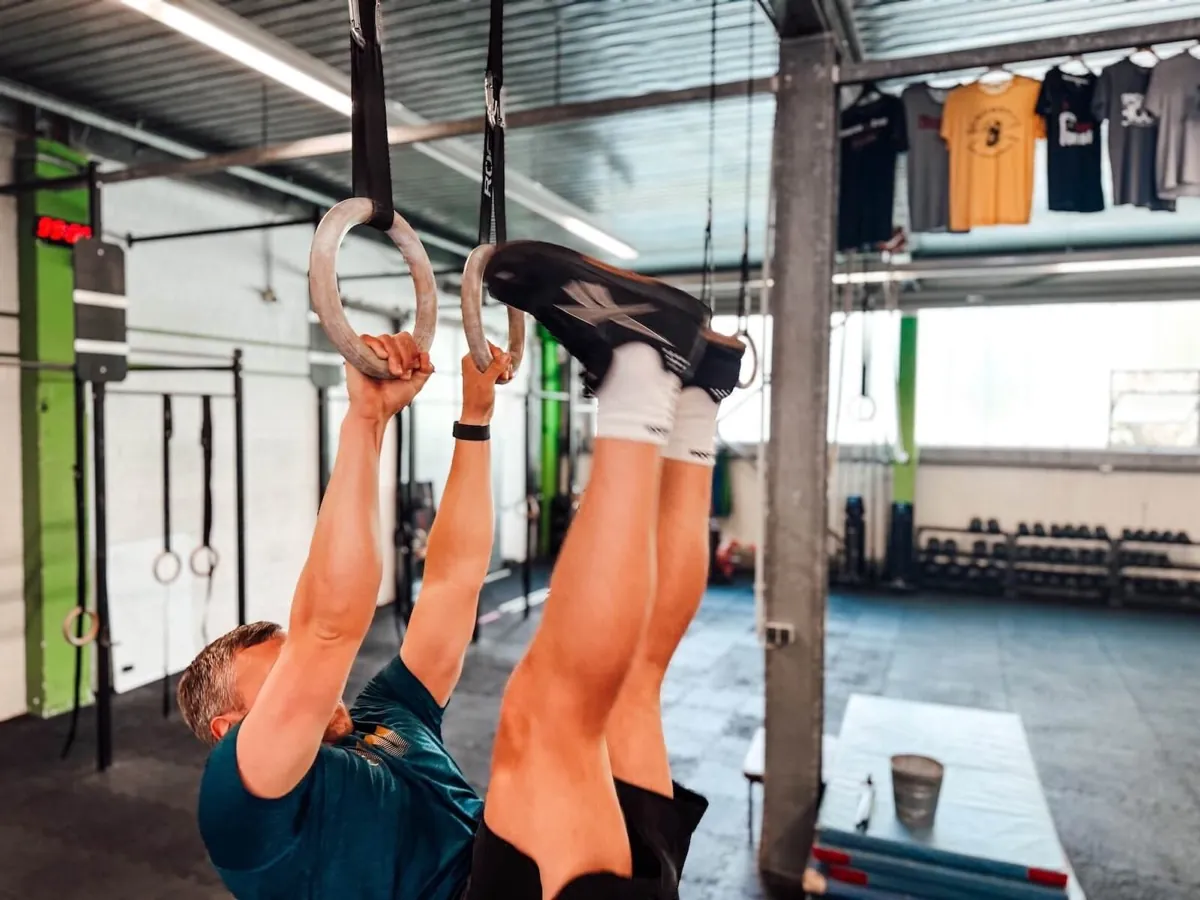
| Toes-to-bar | ✓ | ✓ |
| Handstand push-ups | ✓ | ✓ |
| Bar muscle-ups | ✓ | ✓ |
| Ring muscle-ups | ✓ | ✓ |
The kipping technique naturally looks different depending on the movement:
- In the pull-up you mainly use the switch between hollow and arch to generate momentum.
- In the handstand push-up you pull your knees toward your body and then extend your hips and legs explosively to support the pressing movement.
The principle behind it stays the same, though: you use your entire body to perform a movement more efficiently.
What do strict movements train?
If you want to improve your gymnastics in the long run, there's hardly a way around strict training. Because here, you can't rely on momentum.
Your muscles have to perform the movement under control — and that's exactly what makes strict movements so valuable for building your foundational strength.
More strength
The most obvious benefit: strict movements make you stronger.
- In strict pull-ups, your back, lats, biceps and forearms have to move your body upward without any extra support.
- In strict handstand push-ups, your shoulders and triceps have to take on significantly more work than in the kipping variation.
More control
Strict training also forces you to consciously control positions. You can't compensate for weaknesses with speed or momentum as easily, so you quickly notice where you're lacking strength or stability.
A better gymnastics foundation
That's exactly why strict movements form an important foundation for more advanced gymnastics skills. The stronger and more controlled you are in the individual positions, the better you can add extra speed and dynamics later.
By the way, that doesn't mean you're ever "done" with strict training. Even if you can comfortably do kipping pull-ups or muscle-ups, it's still worth training strict strength regularly.
What do kipping movements train?
Kipping places different demands on your body. Of course you still need strength. But additional skills come into play that matter far less in a slow strict rep.
Timing and coordination
An efficient kip lives on the right moment: hips, core, shoulders and legs have to work together. If you pull too early, open your hips too late or lose body tension, a large part of your momentum fizzles out.
Rhythm
A single kipping rep is one thing. Linking ten or twenty reps together smoothly is something completely different.
After every rep you have to get back into a good starting position and transition straight into the next movement. It's exactly this rhythm that makes good kipping so efficient.
Movement efficiency
Kipping lets you distribute the work across more muscle groups. Instead of handling a movement exclusively with your upper body, you use your hips and legs, for example, to generate extra energy.
That way — with clean technique — you can often complete more reps in less time. And in a workout, that's the decisive advantage.
Why Does Kipping Exist in Functional Fitness at All?
"Kipping pull-ups are just cheated pull-ups."
You've probably heard that sentence before. But it compares two movements that pursue different training goals.
In a strict variation, you have to manage the movement without deliberately generated momentum. So if you want to improve your pure pulling strength, strict pull-ups are the right choice.
In a workout, however, the goal can be a different one.
Kipping makes high rep counts more efficient
Imagine a workout calls for 30 pull-ups for time.
You could do all the reps strict. With clean kipping technique, however, you can usually get through the 30 pull-ups considerably faster and link more reps together — whether you then go unbroken or split them up is a strategy question of its own.
That's exactly what kipping is used for in functional fitness: you use your entire body to handle larger rep counts efficiently.
The principle doesn't just apply to pull-ups:
- Kipping toes-to-bar can be linked together rhythmically.
- In the kipping handstand push-up, hips and legs support the pressing movement.
- In bar and ring muscle-ups, the kip helps you generate momentum for the movement over the bar or rings.
Kipping is therefore neither the "better" nor simply the "easier" variation. It changes the training stimulus and the purpose of the movement.
Why Strict Strength Should Be the Base for Kipping

Now you could say: if kipping is faster and more efficient in workouts — why spend much time on strict training at all?
Because kipping shouldn't replace missing foundational strength.
Gymnastics movements in particular put considerable forces on your shoulders and elbows. Add speed on top of that. If you only somehow get through a movement with the help of momentum but can barely control the individual positions, you're missing an important foundation.
Before using kipping intensively in workouts, you should therefore be able to, among other things:
- actively control your shoulder position,
- have sufficient pulling or pressing strength,
- hold stable body tension,
- master the basic positions of the movement,
- start and stop the kip in a controlled way.
How much strict strength you need exactly depends on the movement and your individual level. Blanket rules like "you need ten strict pull-ups before you're allowed to kip" therefore fall short.
What matters more is whether you have control over the movement.
If you can't stop your kip at any time, your shoulders hang passively in the end positions, or you only reach the next rep with ever bigger swings, you should take a step back.
Important: kipping is not a scaling option for strict
This point is especially important. If you can't do a strict pull-up yet, a kipping pull-up is not automatically the easier scaling option.
After all, the training goal of a strict pull-up is building pulling strength. If you replace that movement with momentum, you're no longer training the same thing.
Depending on your training goal, better options include, for example:
- ring rows
- band-assisted strict pull-ups
- controlled negatives
- isometric holds
- scapular pull-ups
These let you work specifically on the prerequisites you're still missing for your first strict pull-up.
Kipping, on the other hand, should be treated as a technique of its own that you learn in addition — not as a shortcut to your first pull-up.
Strict or Kipping? It Depends on Your Goal
Strict isn't automatically better just because you don't use momentum. Kipping isn't automatically better just because it makes you faster. And kipping is definitely not simply "cheating".
Both variations serve different purposes in functional fitness.
If you want to build strength and control, strict training is your foundation. If you want to handle larger rep counts efficiently in a workout, kipping comes into play.
So the decisive question in your next training session isn't: "Strict or kipping — which is better?" It's: "What do I want to train with this exercise today?"