Isometric exercises often look easier than they are. If you’ve ever tried to hold an L-sit for 30 seconds or not give up early on a wall sit, you know exactly why.
What makes them special: you barely move – or don’t move at all – while your muscles are working hard. That’s exactly what makes isometric training so interesting for functional fitness.
But what do static exercises really do for you? Which ones should you know, and how do you build them into your training the right way?
What Are Isometric Exercises?
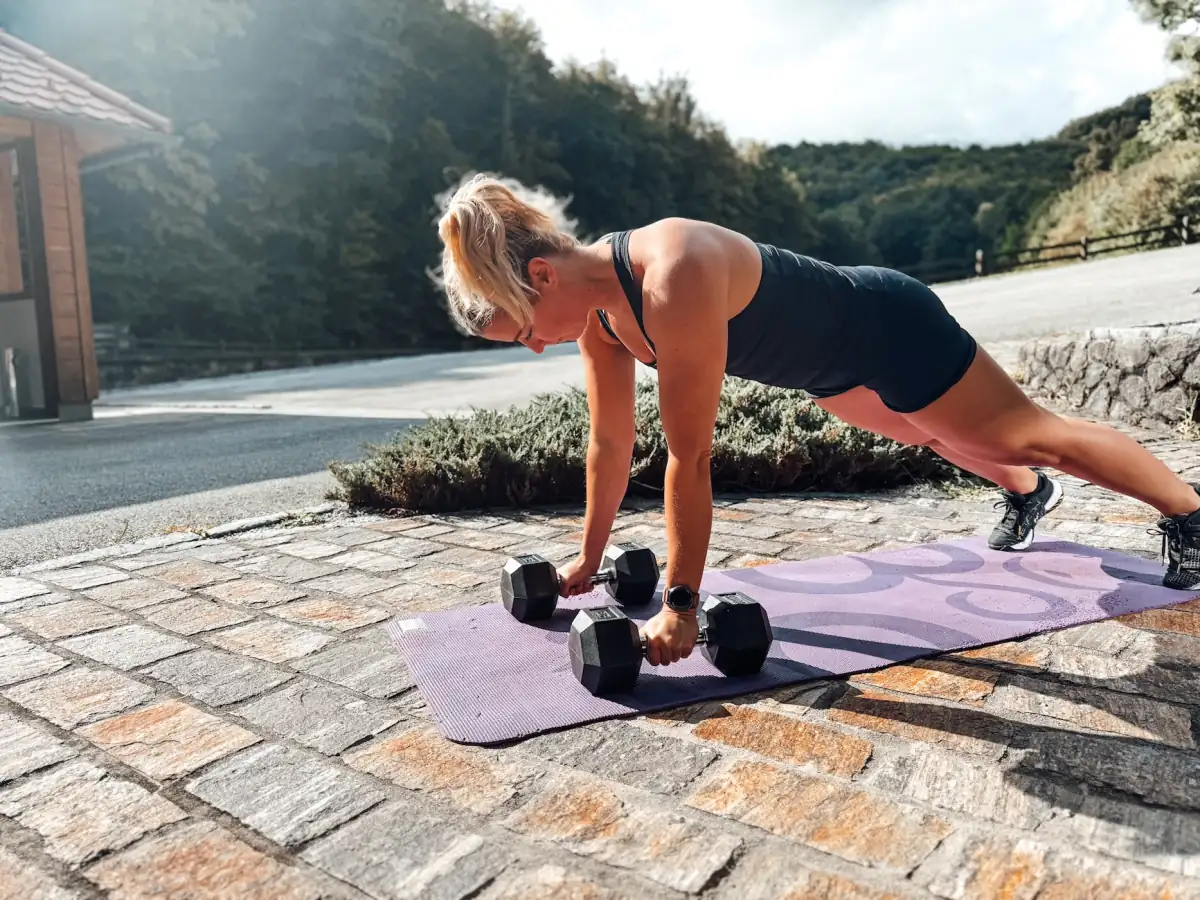
In isometric exercises, you tense your muscles without the joints involved visibly moving. Your muscles produce force while you hold a certain position or push or pull against an immovable resistance.
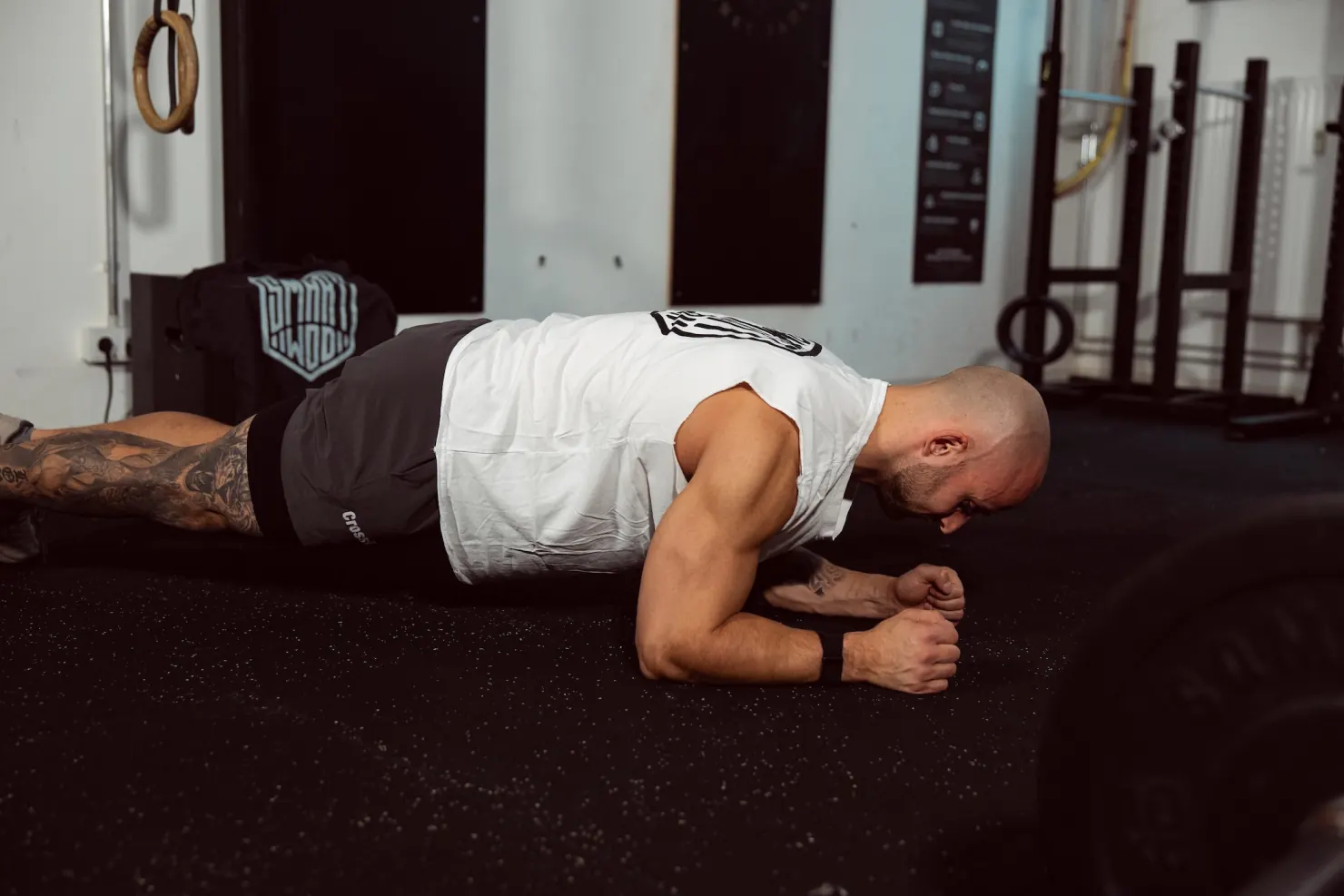
A classic example is the plank: you hold your body in a stable position while your abdominal, back and shoulder muscles work. Unlike a sit-up or crunch, there’s no repeated movement.
So the key difference lies in the type of muscle work:
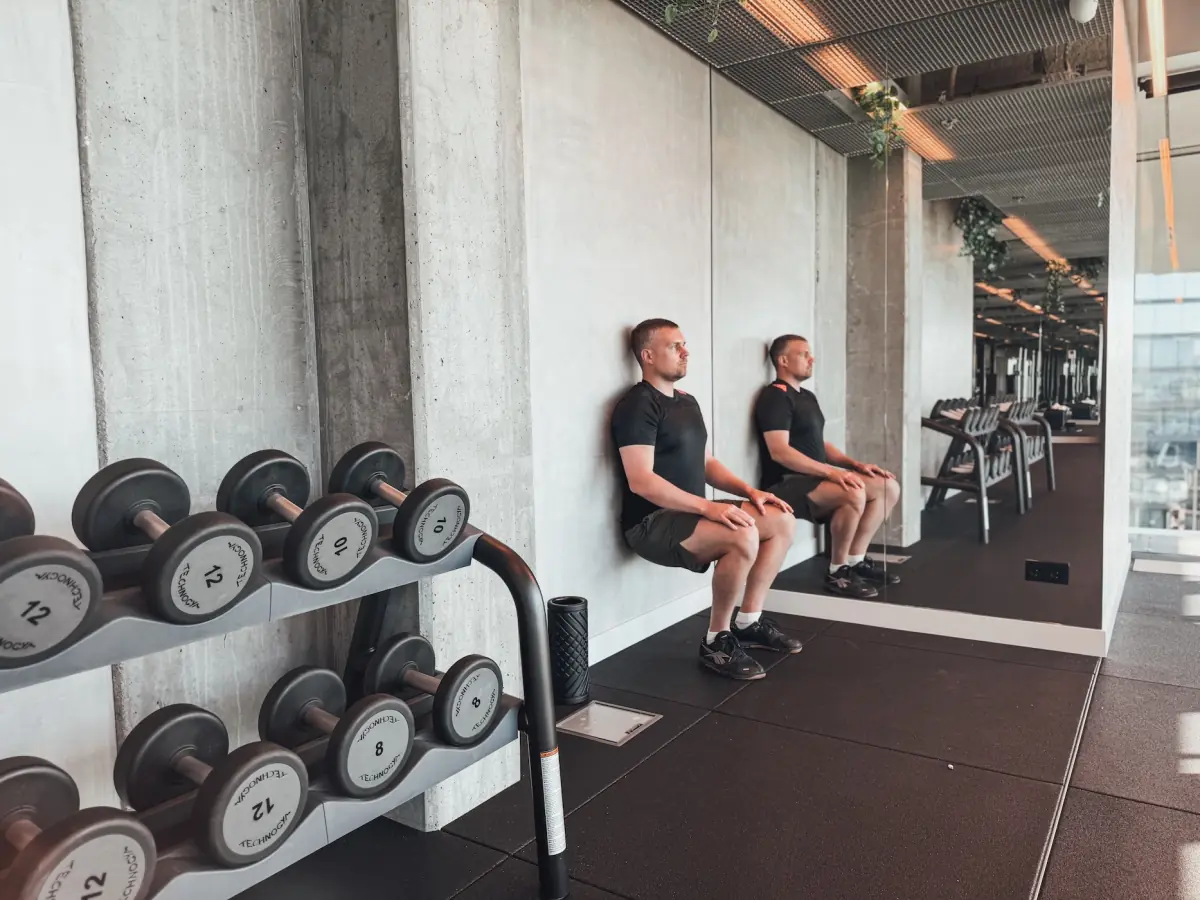
- Isometric: you hold a position, for example during a wall sit.
- Concentric: your muscle shortens under load, for example when driving up out of a squat.
- Eccentric: your muscle lengthens under load, for example when lowering into a squat with control.
That’s why isometric training is also called static training. But static doesn’t mean your muscles have less work to do. Depending on the position, leverage and duration, these exercises can get pretty demanding – much like with time under tension, what counts most is how long your muscles stay under tension.
What Does Isometric Training Do for You?
Isometric strength training can improve your strength, body tension and movement control. How big the effect is depends on how intensely you train and which exercises you choose.
More Strength in Specific Positions
When you hold a position under high muscle tension, you create a strength stimulus. This is especially useful when you want to work on a specific joint angle.
An example: you struggle to hold yourself above the bar during a pull-up. Chin-over-bar holds can help you strengthen exactly that position.
Science backs up the idea that isometric training really makes you stronger: a 2025 meta-analysis looked at 32 studies with a total of 621 participants. The result: isometric training led to greater strength gains in static strength tests than dynamic training.
There is one limitation, though: the strength gains are partly angle-specific. Getting stronger in one position doesn’t automatically mean your strength improves to the same degree across the full range of motion.
Better Body Tension and Stability
Hollow holds, planks and L-sits require you to activate several muscle groups at the same time and control your body position.
This can pay off especially in functional fitness movements where you need a stable core. Think of pull-ups, toes-to-bar, handstands or heavy overhead exercises.
A hollow hold on its own won’t automatically make you better at toes-to-bar. But it can help you develop the body tension you need for movements like these.
Strength Training Without Extra Movement
Another advantage: many isometric exercises need hardly any equipment. Your own body weight, a wall or a pull-up bar is often enough – just like many bodyweight exercises for building strength.
You can also adjust the load through hold time, leverage or how hard you tense your muscles. That makes isometric exercises a practical addition to warm-ups, accessory work and targeted strength sessions.
The 8 Best Isometric Exercises for Functional Fitness

From simple holds to demanding gymnastics skills: these eight exercises can be adapted to different fitness levels and train a range of muscle groups.
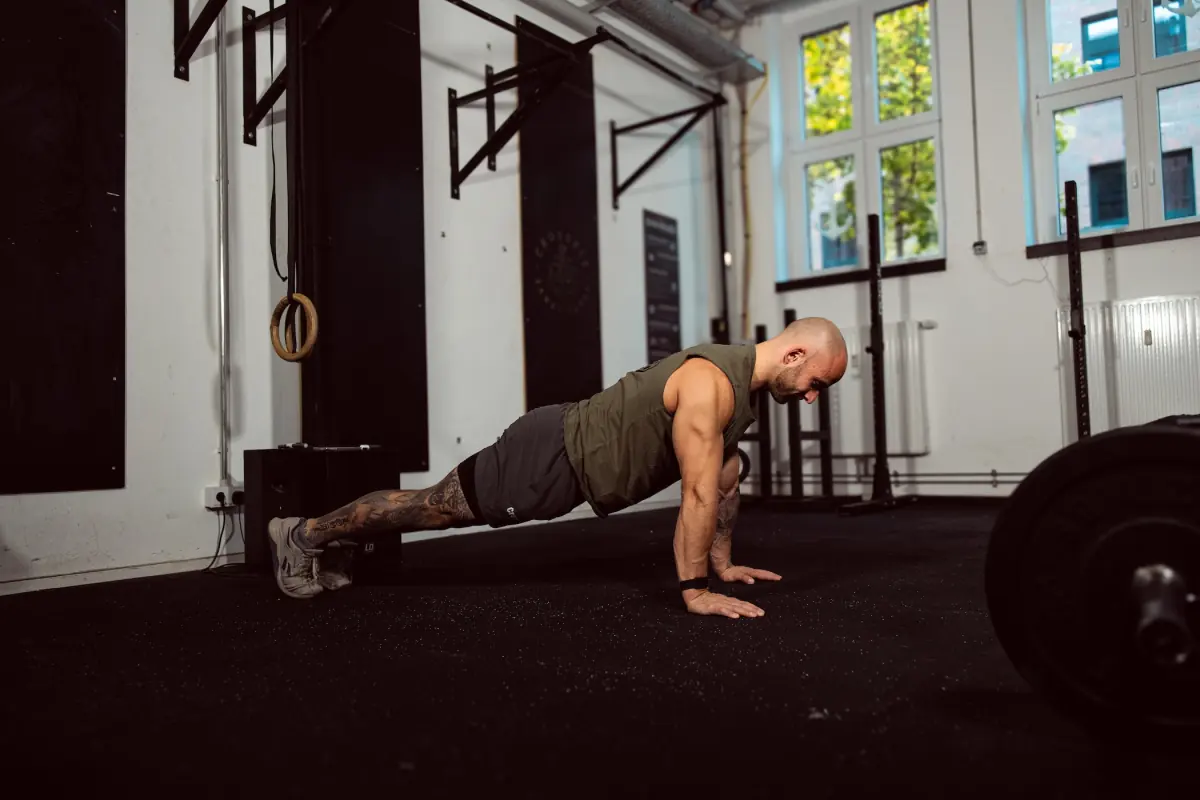
1. Plank
The plank is one of the best-known isometric exercises and is especially useful for core stability.
How to: Support yourself on your forearms and toes. Brace your abs and glutes and keep your body in as straight a line as possible. Avoid letting your lower back sag or pushing your hips too high.
Works: Abdominal muscles, core stability and shoulder girdle.
Tip: Start with 20–30 seconds of clean body tension. A shorter, controlled position does more for you than two minutes with a sagging back.
2. Wall Sit
A wall sit quickly shows you how tough an exercise without movement can get.
How to: Lean your back against a wall and slide down until your knees form roughly a right angle. Your feet stay planted firmly on the floor, and your back stays against the wall.
Works: Mainly the front thigh muscles.
Tip: Start with 20–40 seconds. Once you can hold the position with control, extend the duration or adjust the load.
3. Dead Hang
A dead hang doesn’t look spectacular, but it’s a great way to train your grip strength on the pull-up bar.
How to: Grab the pull-up bar about shoulder-width apart and hang with straight arms. Your feet don’t touch the floor. Hold the position with control, without swinging.
Works: Mainly grip strength and the muscles you need for hanging.
Tip: If you can’t hold 20 seconds yet, start with shorter intervals. If needed, you can partially support your feet on a box.
4. Active Hang
In an active hang you also stay hanging from the bar, but you deliberately engage your shoulder muscles.
How to: Start hanging with straight arms. Pull your shoulder blades down with control without bending your elbows. This lifts your body slightly.
Works: Scapular control, shoulder girdle and grip strength.
Tip: Hold the active position for 5–15 seconds to start. The active hang is also a useful progression for strict pull-ups and other gymnastics movements.
5. Hollow Hold
The hollow hold is one of the most important positions in gymnastics training and lays the foundation for many movements on the bar.
How to: Lie on your back, brace your abs and press your lower back into the floor with control. Lift your shoulders and legs slightly. You can extend your arms overhead.
Works: Mainly the abdominal muscles and control of your trunk position.
Tip: If your lower back loses contact with the floor, bend your knees a little or keep your arms by your sides. Only increase the difficulty once you can control the position reliably.
6. L-Sit
The L-sit combines core strength with high tension in the shoulders and hip flexors.
How to: Support yourself on parallettes or dip bars, actively push your shoulders down and raise your straight legs in front of you until your body forms roughly an L shape.
Works: Abdominal muscles, hip flexors, triceps and shoulder girdle.
Tip: Start with a tuck L-sit, holding your knees bent. Even 5–10 seconds can be a real challenge here.
7. Handstand Hold
A handstand hold isn’t just about strength – it’s also about body tension, balance and shoulder control.
How to: Start with a chest-to-wall handstand, for example. Actively push up through your shoulders, keep your core tight and try to create as stable a body line as possible.
Works: Shoulders, triceps, core and wrist stability.
Tip: You don’t have to balance freestanding right away. A controlled handstand against the wall is already a demanding isometric exercise.
8. Chin-Over-Bar Hold
If you want to work on your strict pull-ups, the chin-over-bar hold is a useful addition.
How to: Get into the top pull-up position with a pull-up or with the help of a box. Your chin is above the bar. Hold the position without supporting yourself with your legs.
Works: Upper back, biceps and grip strength.
Tip: Start with 5–10 seconds. If you can’t reach the position on your own, use a box to get there.
By the way: you’ll find more exercise variations and videos in the exercise library of the SmartWOD Workout Generator.
How Do You Add Isometric Exercises to Your Training?
You don’t have to spend an entire session doing nothing but holds. For most people, it makes more sense to build isometric exercises into existing workouts in a targeted way.
How long you hold a position depends heavily on the exercise and your training goal. A demanding L-sit may be over after ten seconds, while you might be able to hold a clean plank for 30 or 45 seconds.
As a starting point, you can use these guidelines:
| Exercise type | Hold time per set | Sets |
|---|---|---|
| Simple holds like the plank or wall sit | 20–40 seconds | 2–3 |
| Demanding holds like the L-sit or active hang | 5–20 seconds | 3–4 |
| Very intense, targeted strength holds | 3–10 seconds | 3–5 |
These numbers aren’t fixed training rules. For maximal isometric strength, for example, shorter, very intense contractions are often used, while longer holds focus more on the ability to keep a position stable over time.
Ready for a Little More Tension?
Whether it’s a plank, L-sit or handstand hold: what matters isn’t holding on as long as possible, but holding the position with control and enough tension.
In the SmartWOD Workout Generator, you’ll find more exercises and matching workouts for your equipment. And with the SmartWOD Timer, you can easily manage your holds, rest periods and intervals.
So: pick two or three exercises and try them out in your next strength or accessory session. You’ll quickly realize that staying still can be pretty exhausting.